

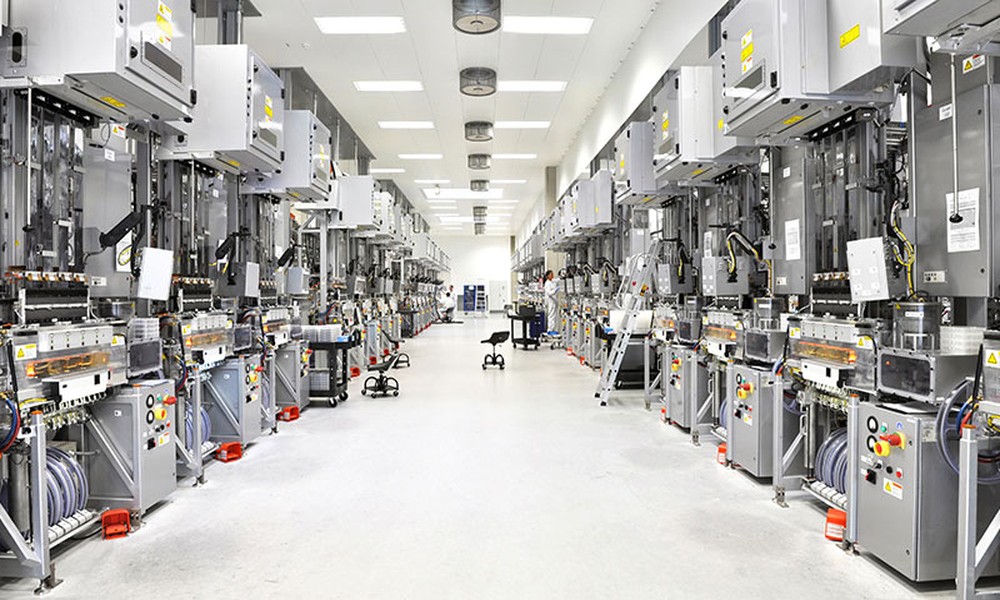
Achieving high repeatability is the cornerstone of any successful production line. For maintenance managers and automation engineers, the goal is simple: every unit coming off the assembly line should be identical to the one before it. While the objective is straightforward, the execution often feels like a choice between expensive high-end machinery or accepting a higher margin of error. Increasing precision does not always require a massive capital infusion or a complete overhaul of existing infrastructure.
Identifying Variability at the Source
Variability often creeps into a process through subtle environmental changes or manual intervention. In many small and medium-sized enterprises, the lack of consistency stems from how tools interact with the workpiece. Manual loading, inconsistent clamping force, and slight variations in tool positioning accumulate over a shift. These micro-deviations lead to rework, scrap, and unpredictable cycle times.
Instead of replacing entire machines, focus on the end-of-arm tooling and sensing capabilities. Enhancing the “touch” of an automated system can compensate for irregularities in raw materials or minor misalignments in the jig. By stabilizing these interface points, the existing machinery operates at a higher tier of performance without the cost of a full replacement.
The Role of Modular Automation
Rigid automation systems are precise but brittle. When a product design changes, the cost of retooling often wipes out the efficiency gains made during the previous run. Modular components allow production managers to pivot quickly while maintaining the same level of repeatability. This flexibility is particularly vital for SME owners who need to justify every investment through rapid ROI and long-term utility.
Integrating smart peripherals can bridge the gap between basic mechanical movement and intelligent processing. For those looking to optimize their current setup, it is helpful to view more technical specifications regarding how collaborative applications handle delicate or varied tasks. Standardizing the communication between the robot and the gripper or sensor reduces the time spent on troubleshooting and calibration, which are hidden costs in many manufacturing budgets.
Data-Driven Calibration and Maintenance
Predictive maintenance is frequently discussed in the context of preventing total system failure, but its role in repeatability is equally critical. A bearing that is beginning to wear might not stop a machine today, but the microscopic vibration it introduces can compromise the tolerances of a finished part.
- Vibration Analysis: Monitoring the harmonics of a motor to detect wear before it affects part quality.
- Torque Monitoring: Ensuring that fastening processes remain within a tight window of force.
- Thermal Regulation: Accounting for material expansion and contraction during long shifts.
By monitoring these variables, maintenance teams can intervene based on performance drifts rather than arbitrary calendar dates. This proactive stance ensures that the “golden run” achieved during the initial setup remains the standard throughout the entire lifecycle of the equipment.
Refinement Through Software and Simulation
Before any physical changes are made to the floor, digital twins and simulation tools offer a low-cost environment for testing process improvements. Modern software allows engineers to visualize how different speeds, paths, and forces affect the final output. This avoids the trial-and-error phase on the actual production line, which often leads to wasted material and lost uptime.
Optimizing the code that drives an automated cell can often yield better results than hardware upgrades. Refining the acceleration and deceleration ramps of a robotic arm can reduce “ringing” or oscillation at the end of a movement. These software-level adjustments cost nothing in terms of hardware but can significantly tighten the distribution of quality metrics across thousands of cycles.
The shift toward higher repeatability is increasingly a matter of intelligence rather than brute force. By focusing on the points of contact, utilizing modular hardware, and leveraging precise data, manufacturers can achieve elite-level consistency on a realistic budget. Refined processes lead to predictable outcomes, allowing managers to focus on scaling operations rather than managing defects.
